Nordic Boats Through Time
When the Gokstad and Skuldelev hulls were excavated in the late nineteenth and twentieth centuries, the archaeologists best able to interpret their tool marks were not university classicists, but working boatbuilders from western and northern Norway. In fjord boat-sheds from Hordaland to Lofoten, the shell-first clinker tradition had never died out.
1. The Medieval Transition: Large Cargo Busser and Hanseatic Cogs
From the late eleventh to the fourteenth century, expanding bulk trade in dried Lofoten cod (stockfish), grain, salt and building timber pushed Scandinavian shipwrights toward deeper, high-sided cargo hulls known as busser. Excavations in the Bergen harbourfront at Bryggen uncovered massive timbers from the Big Ship from Bryggen (built c. 1188 CE), a clinker-built merchant vessel roughly 30 metres long and 9 metres wide capable of carrying over 120 tons of cargo.
Simultaneously, North German merchants of the Hanseatic League introduced the flat-bottomed cog with straight stemposts and a sternpost-mounted pintle rudder. While large Baltic and North Sea freighters gradually shifted toward heavy carvel construction by the late fifteenth century, small and medium coastal craft across Norway, Sweden, Denmark, Finland, Iceland and the Faroe Islands stayed faithful to overlapping clinker strakes. On rocky shores without deep quays, nothing replaced a light, double-ended clinker boat.
2. Regional Workboat Families of the Nordic Coast
Each stretch of the Scandinavian coast tuned the clinker hull to its local wind, timber supply and wave steepness, naming boats either by their home district or by the number of oar pairs (a two-pair four-oared boat is a færing; a three-pair six-oared boat is a seksring; a five-pair ten-oared boat is a fembøring):
- Oselvar (Hordaland, Western Norway): Built with only three wide, paper-thin pine strakes per side that twist dramatically from a vertical stem entry into a flat midship floor. Used under spritsail and oars for fjord transport and coastal fishing.
- Sunnfjordbåt & Nordfjordbåt: Characterized by narrow, steeply rising strakes forward that slice cold fjord chop without throwing spray into the boat.
- Åfjordsbåt (Trøndelag): Recognizable by its raked, straight stems and asymmetrical square sail (or lug rig), perfected for long exposed coastal passages.
- Nordlandsbåt (Helgeland, Lofoten & Vesterålen): With high, nearly vertical stemposts reminiscent of Viking Age silhouettes, thousands of Nordlandsbåt crews rowed and sailed out to the winter Lofoten cod fishery well into the early twentieth century.
- Færøbåd (Faroe Islands): Because the Faroes lack native forests, builders imported drift timber or Norwegian pine to craft exquisite आठ-strake hulls optimized for fierce tidal currents between volcanic islands.
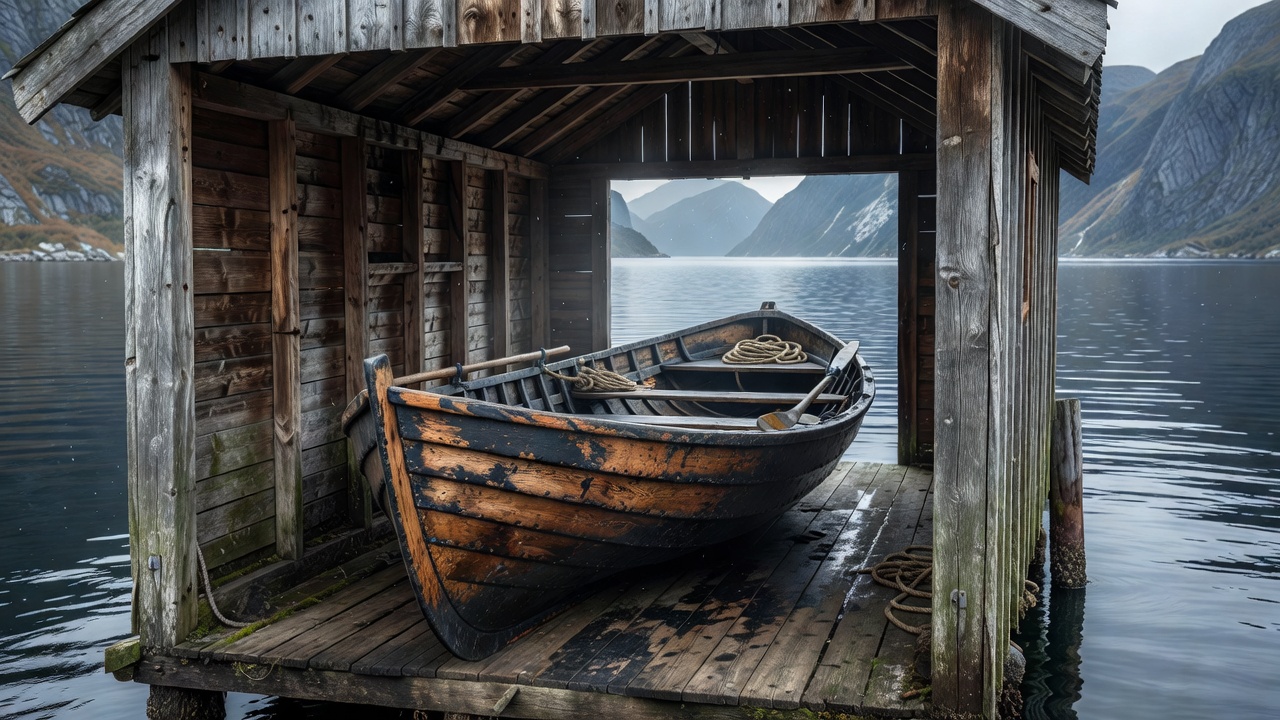
3. 2021 UNESCO Inscription: Nordic Clinker Boat Traditions
In December 2021, UNESCO inscribed Nordic clinker boat traditions on the Representative List of the Intangible Cultural Heritage of Humanity in a joint nomination by Denmark, Finland, Iceland, Norway and Sweden—the first joint heritage inscription covering all five Nordic countries.
Crucially, this recognition protects not museum artifacts, but the living workshop method: training apprentices to judge plank curvature by eye, cleaving and steaming strakes, clenching copper or iron rivets over roves, and sailing traditional rigs along coastal waterways.
4. Field Guide to Coastal Museums and Working Boatyards
For readers planning fieldwork or study visits across Scandinavia and Northern Germany, these institutions combine conserved archaeological hulls with active reconstruction boatyards:
| Institution | Location | Core Collections & Working Yard Focus |
|---|---|---|
| Viking Ship Museum (Vikingeskibsmuseet) | Vindeboder 12, Roskilde, Denmark | Conserved Skuldelev 1–6 hulls; active island boatyard building full-scale oak and pine reconstructions using replica Viking-Age axes. |
| Museum of the Viking Age (Vikingtidsmuseet) | Huk Aveny 35, Bygdøy, Oslo, Norway | Stewards the Oseberg, Gokstad and Tune ships alongside sledges, beds, tent frames and carved animal-head posts. |
| Oselvarverkstaden | Osøyro (south of Bergen), Norway | Living boatbuilding workshop where master builders construct traditional three-strake Oselvar boats to order and train apprentices. |
| Viking Museum Ladby | Kerteminde, Funen, Denmark | Preserves the tenth-century Ladby ship burial in its original coastal mound overlooking Kerteminde Fjord, paired with the full-scale replica Ladbysjælden. |
| Wikinger Museum Haithabu | Busdorf (near Schleswig), Germany | Displays the charred oak warship Hedeby 1 and reconstructed waterfront houses on the Schlei fjord. |
| Sunnmøre Museum | Ålesund, Norway | Extensive collection of western Norwegian workboats alongside reconstructions of the Kvalsund and Borgundknarren ships. |